Everything is sliding at once: the climate, the natural world, the way we live together, our trust in politics. Everyone knows it; the findings have been on the table for decades. And yet the fundamentals stay as they are, no matter who is in power. People get used to it, they resign themselves, or they get angry. Anger looks for someone to blame, and each camp finds that someone in the other. And so society breaks apart into communities of conviction that fight one another while the house they share catches fire.
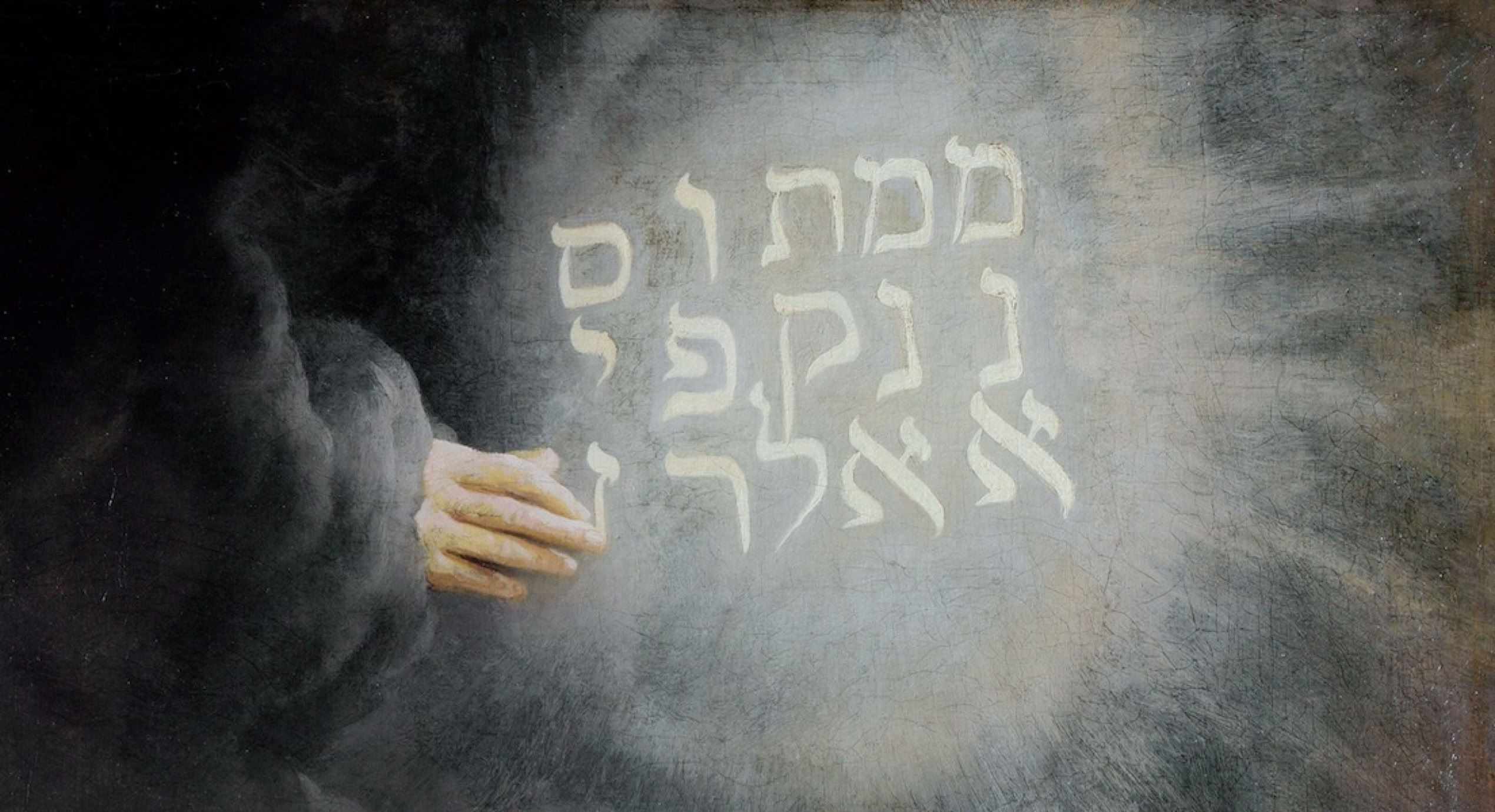
What looks like chaos carries a message. A society that ignores what is trying to emerge within it will face one crisis after another. At Belshazzar’s feast, a hand wrote signs on the wall, and none of the kingdom’s wise men could interpret them. The crises of our time are such a writing of fire. People themselves wrote it, and it becomes legible as soon as you look at it like a photographic negative: with light and dark reversed, it shows in full what people lack and what they long for. What is trying to emerge in it will emerge—by design or by disaster.
The same pattern runs through all of these crises: one sphere of life is organized according to the logic of another. Money decides where the law should decide. Origin and conviction decide where all should decide as citizens with equal rights. Marketability decides where knowledge and free judgment should decide. In the relationship between humankind and the Earth, the pattern appears in reverse: what belongs together is torn apart.
What all this can be measured against, everyone knows from their own life. Every person wants to shape their own life, to be able to rely on a given word, and to find help when they need it. These three expectations recur wherever people live together: in the family, in the workplace, across society as a whole. On a large scale, they take the form of culture, state, and economy, and they become the three directions of a compass. Liberty, where people want to flourish. Equality, where one person’s freedom threatens to become power over another. Fraternity, where people depend on one another. The triad is inscribed on public buildings all over France as Liberté, Égalité, Fraternité; hardly anyone has read it as a compass.
I have been reading this writing for more than a decade, and I do not read it from a safe distance. I take sides: for what people need, and for everyone who wants to bring it about, whatever camp they come from. The standard I apply holds for every camp with the same rigor.
This reading points to a path. It begins with democracy as it exists today and gives back to citizens what they have gradually let slip from their hands. It changes how a society decides and leaves to it what it decides. Every step can be tested against its consequences and corrected. What can emerge this way is an evolutionary step for society of revolutionary scope, one that requires no revolutionary violence: rEvolution.
What remains open is whether it will come from deliberate design or under the pressure of catastrophe. Society is moving toward a tipping point at which enough people begin to think differently and circumstances begin to shift. The Earth is moving toward another, beyond which there is no way back. No one knows for certain where we stand between the two, but whichever is reached first will decide. If there is still time to turn the ship around, it is now. The Greeks called such a moment kaïros—the right moment, the one that does not come again.